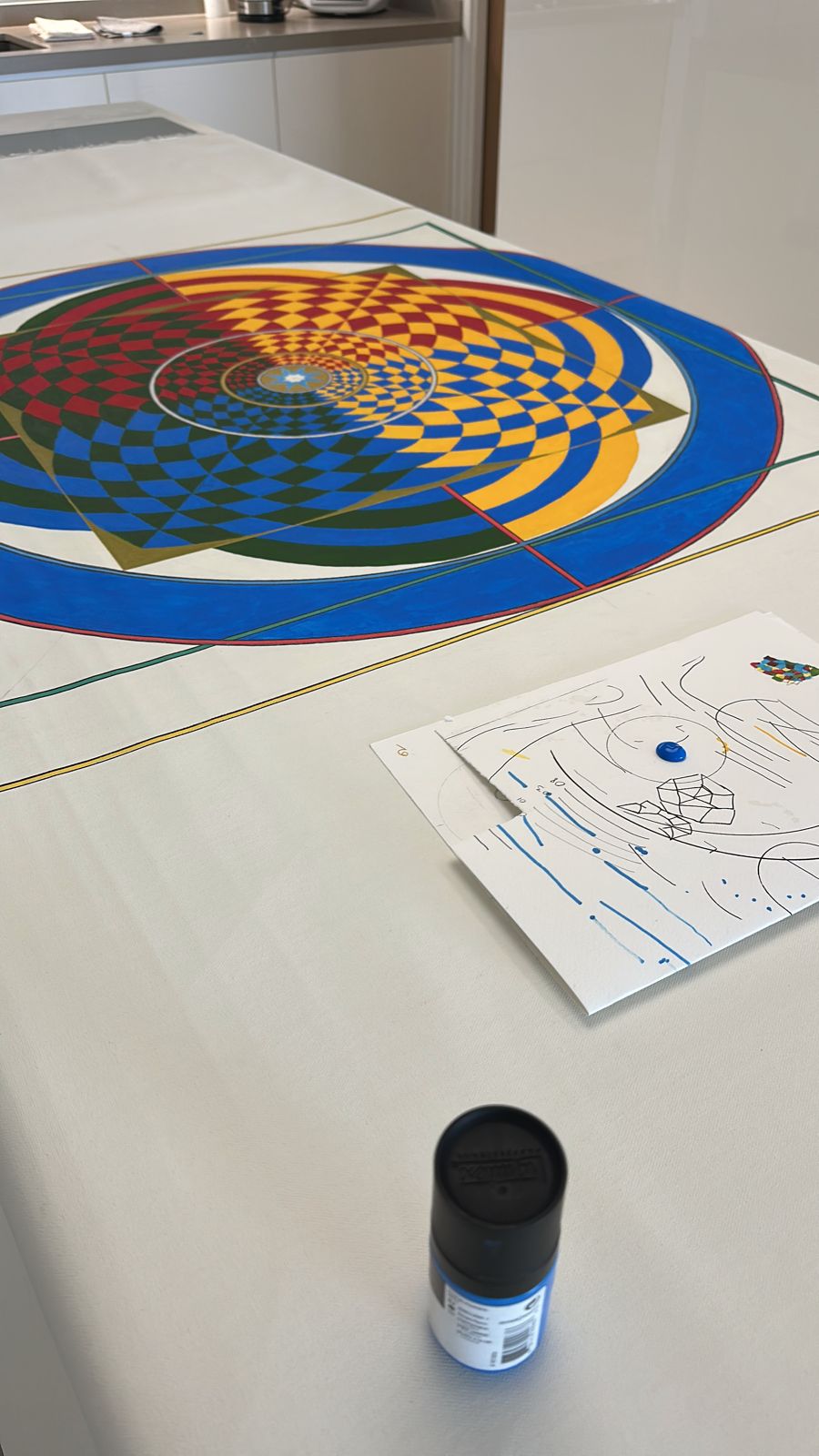
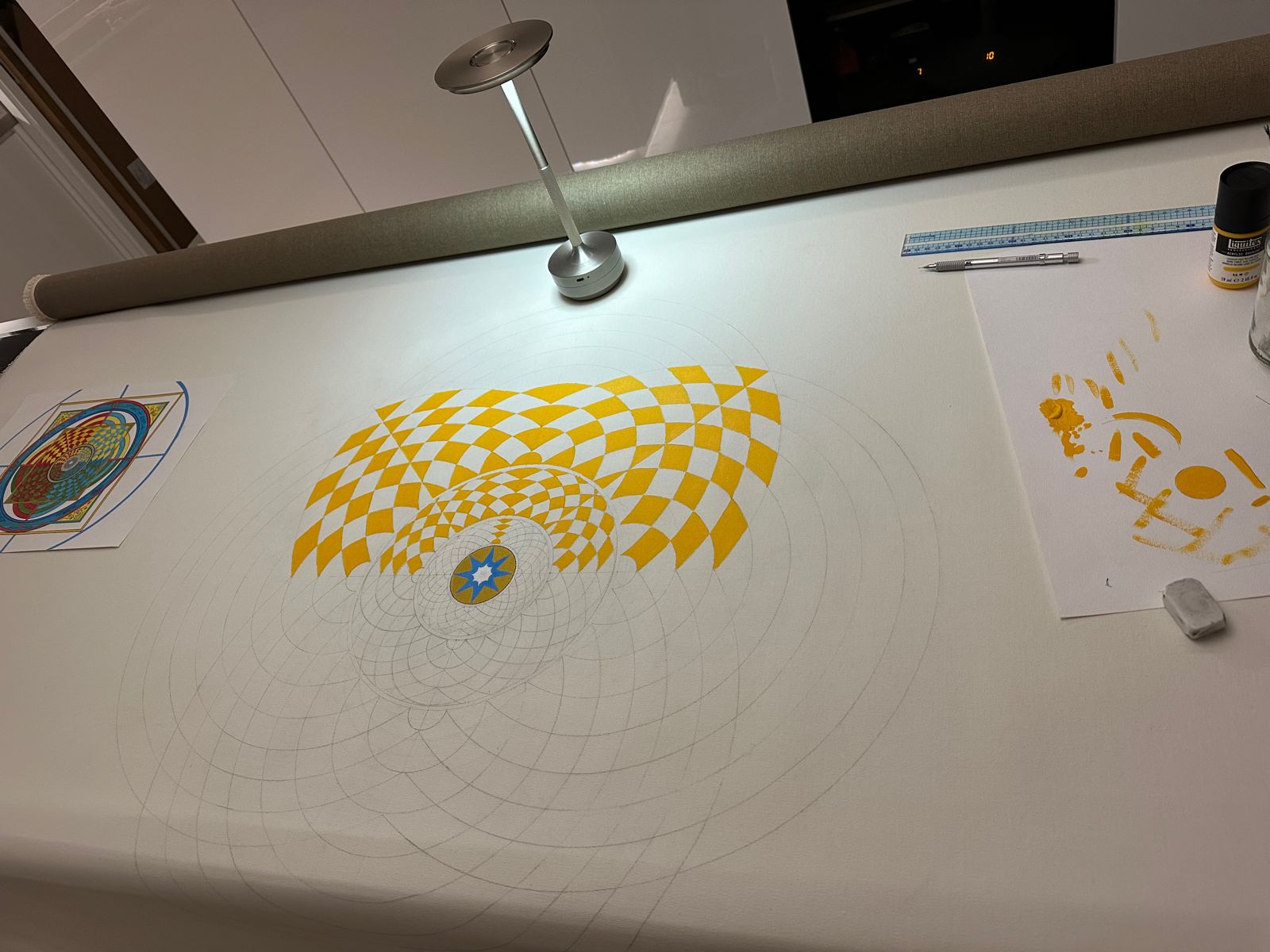
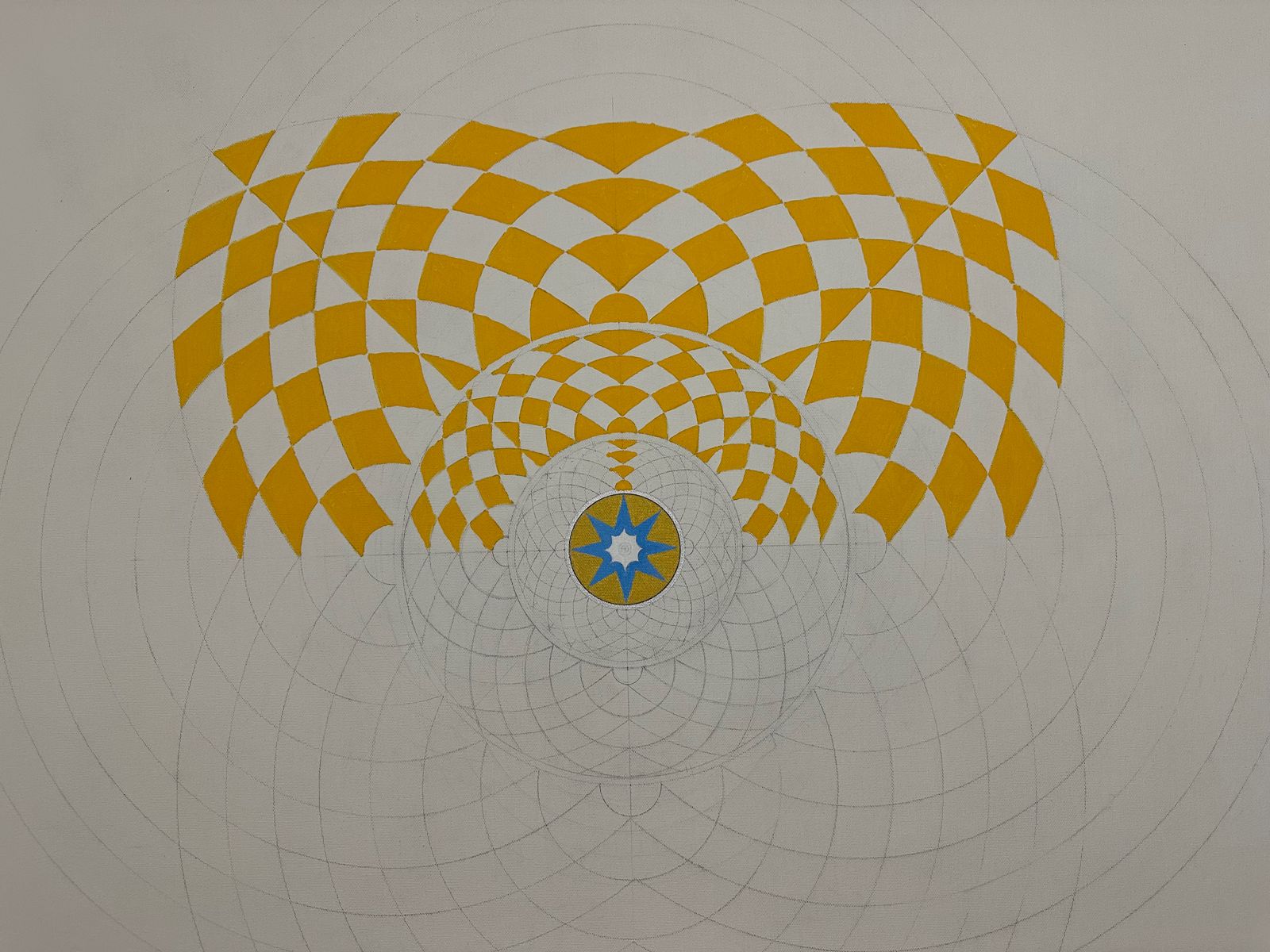
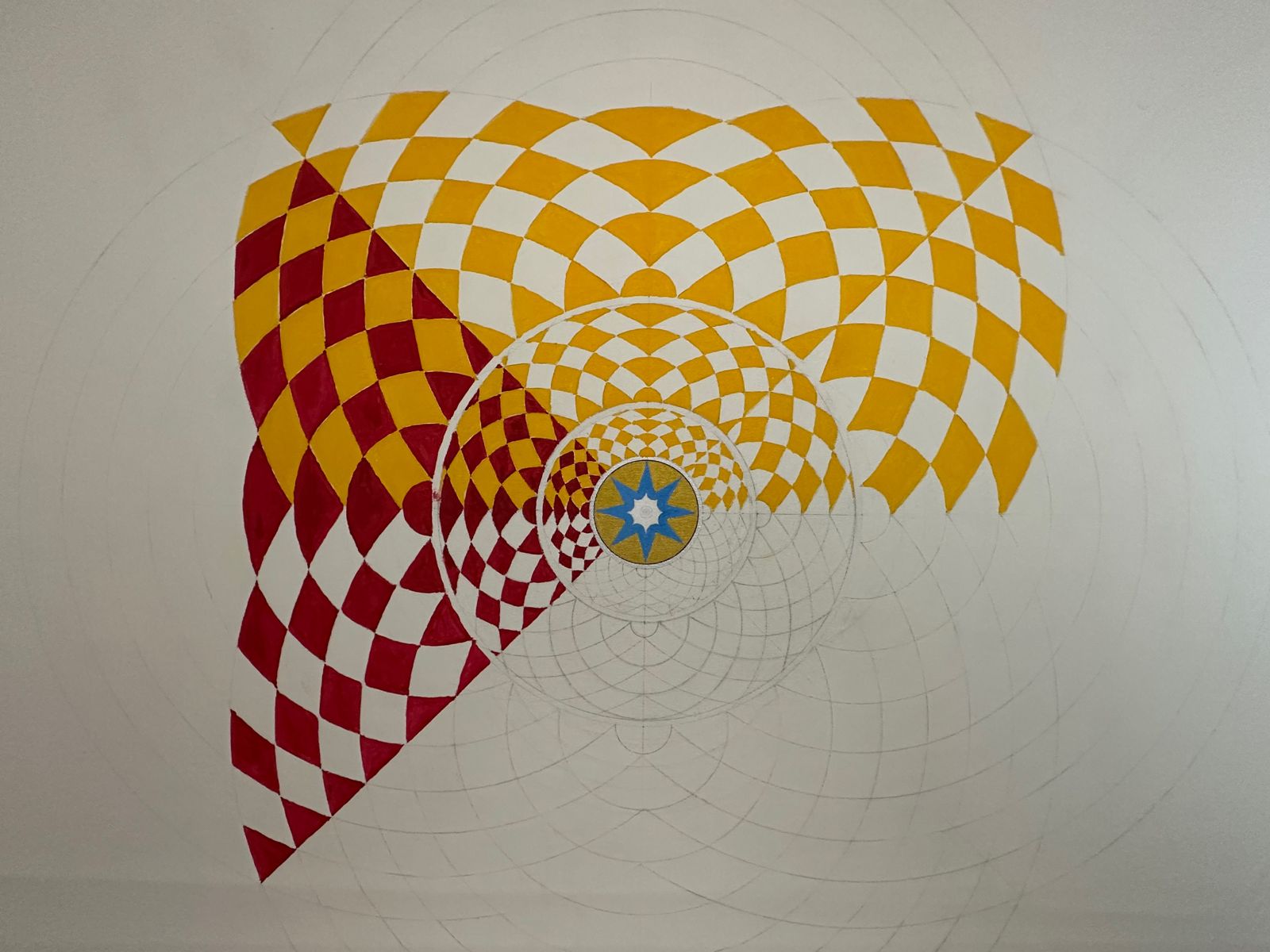
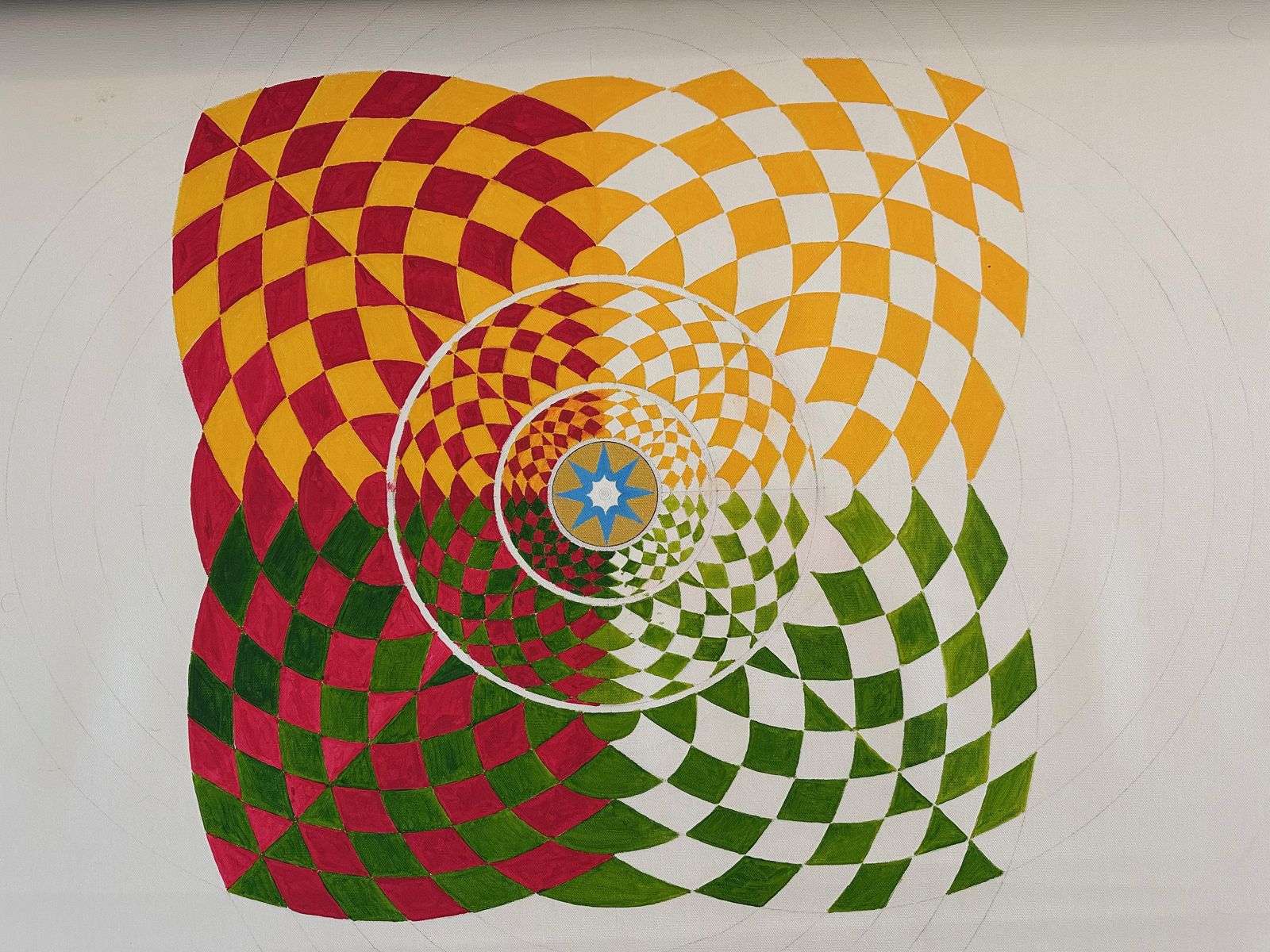
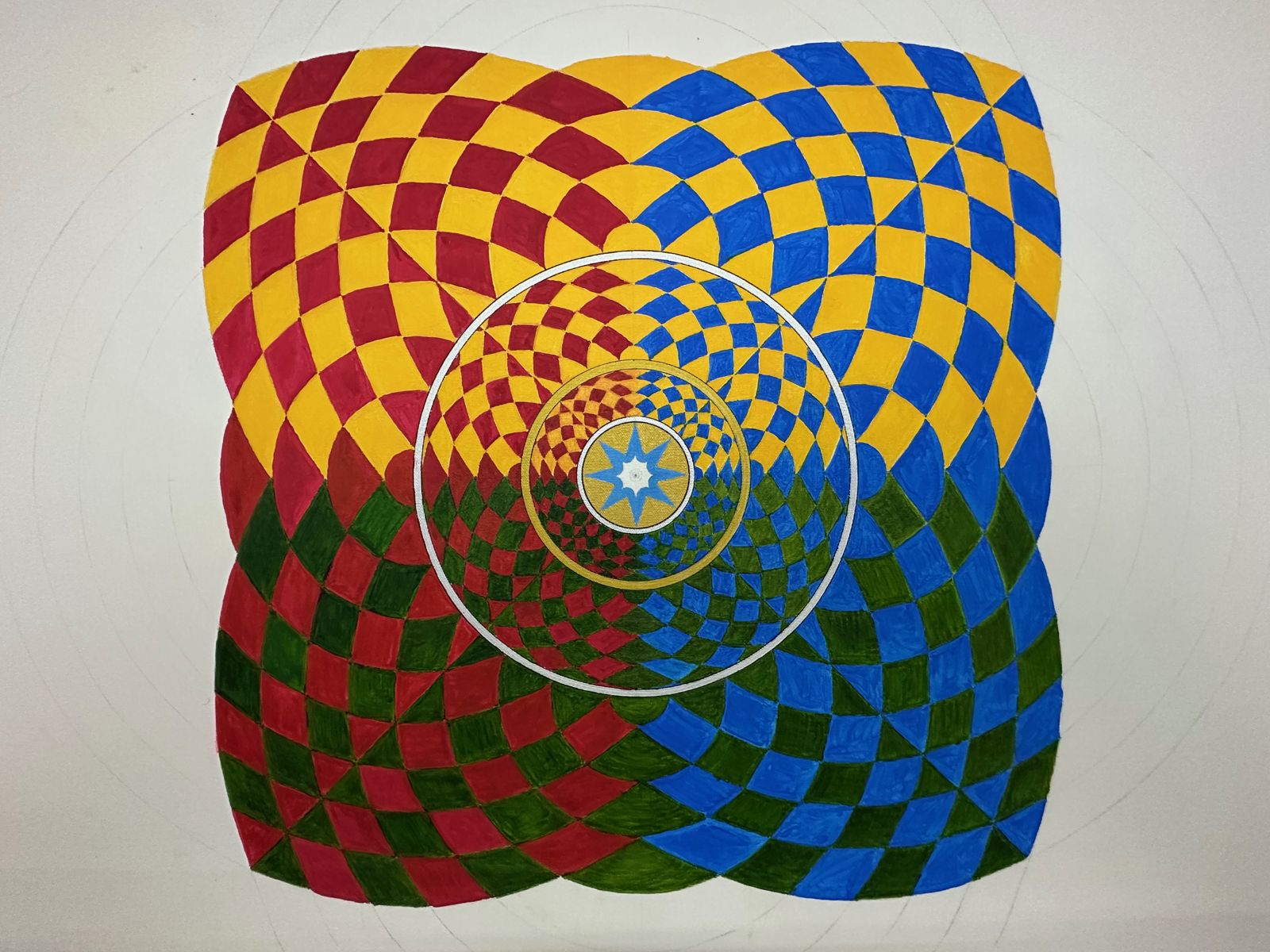
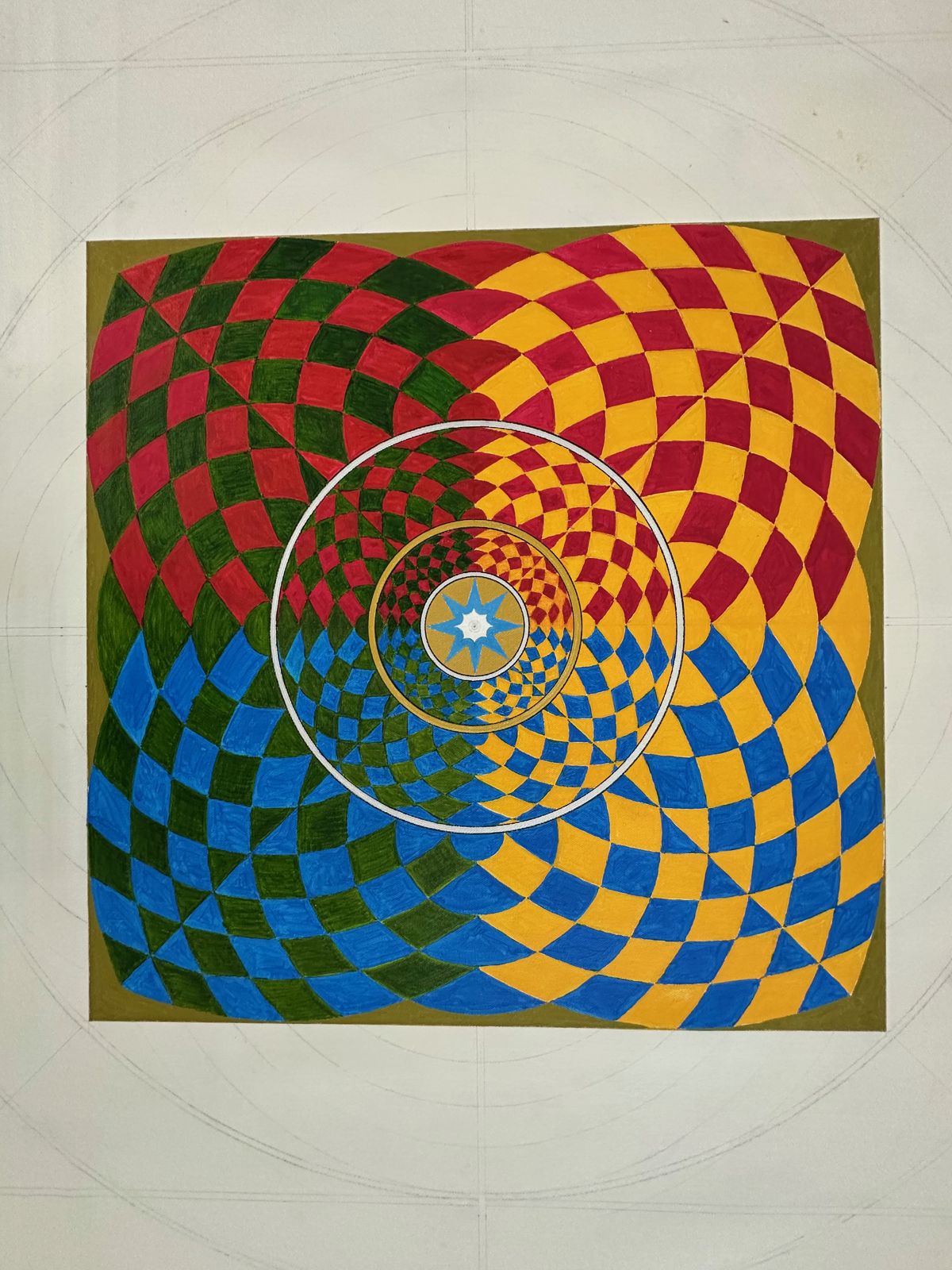
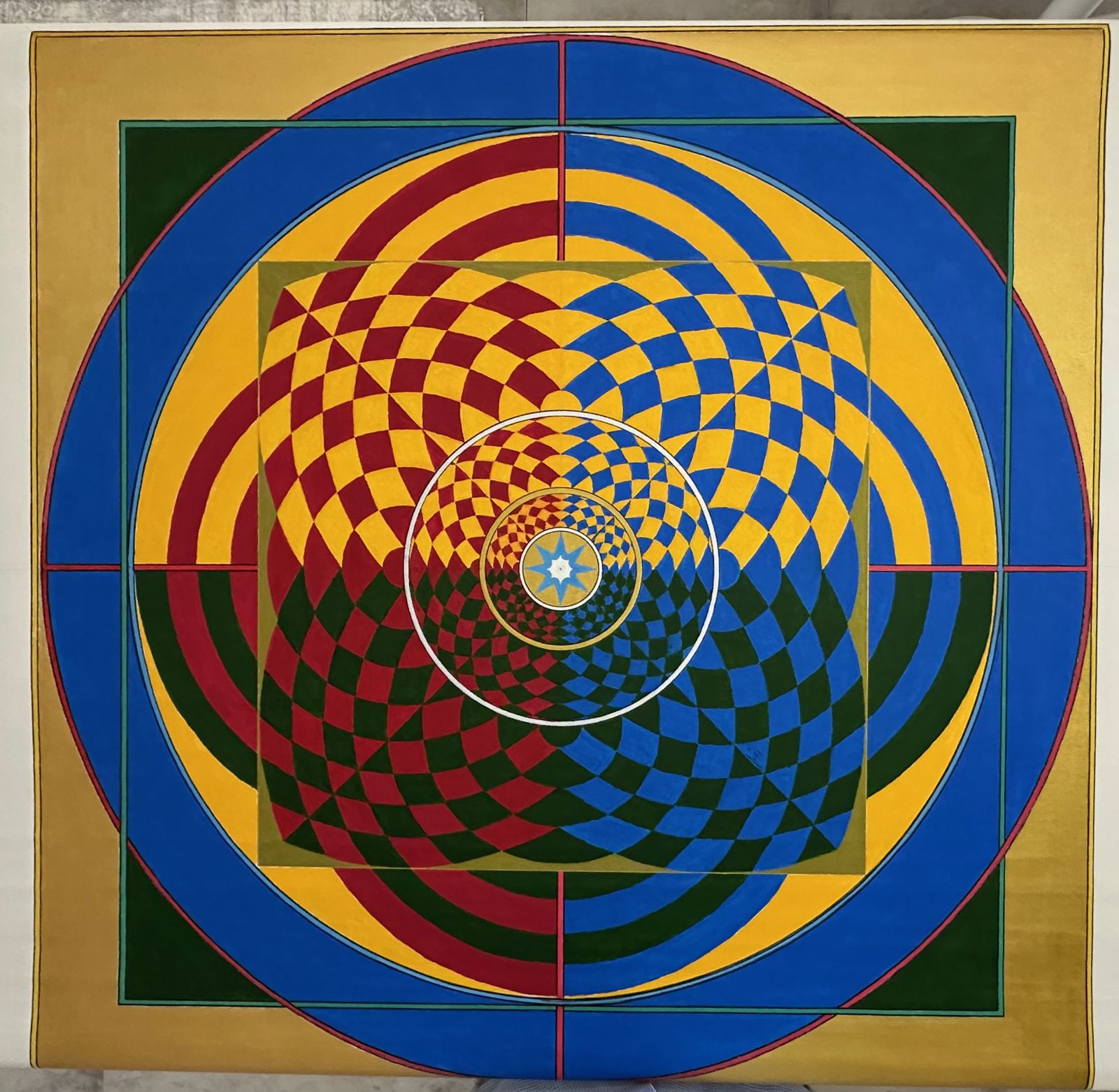
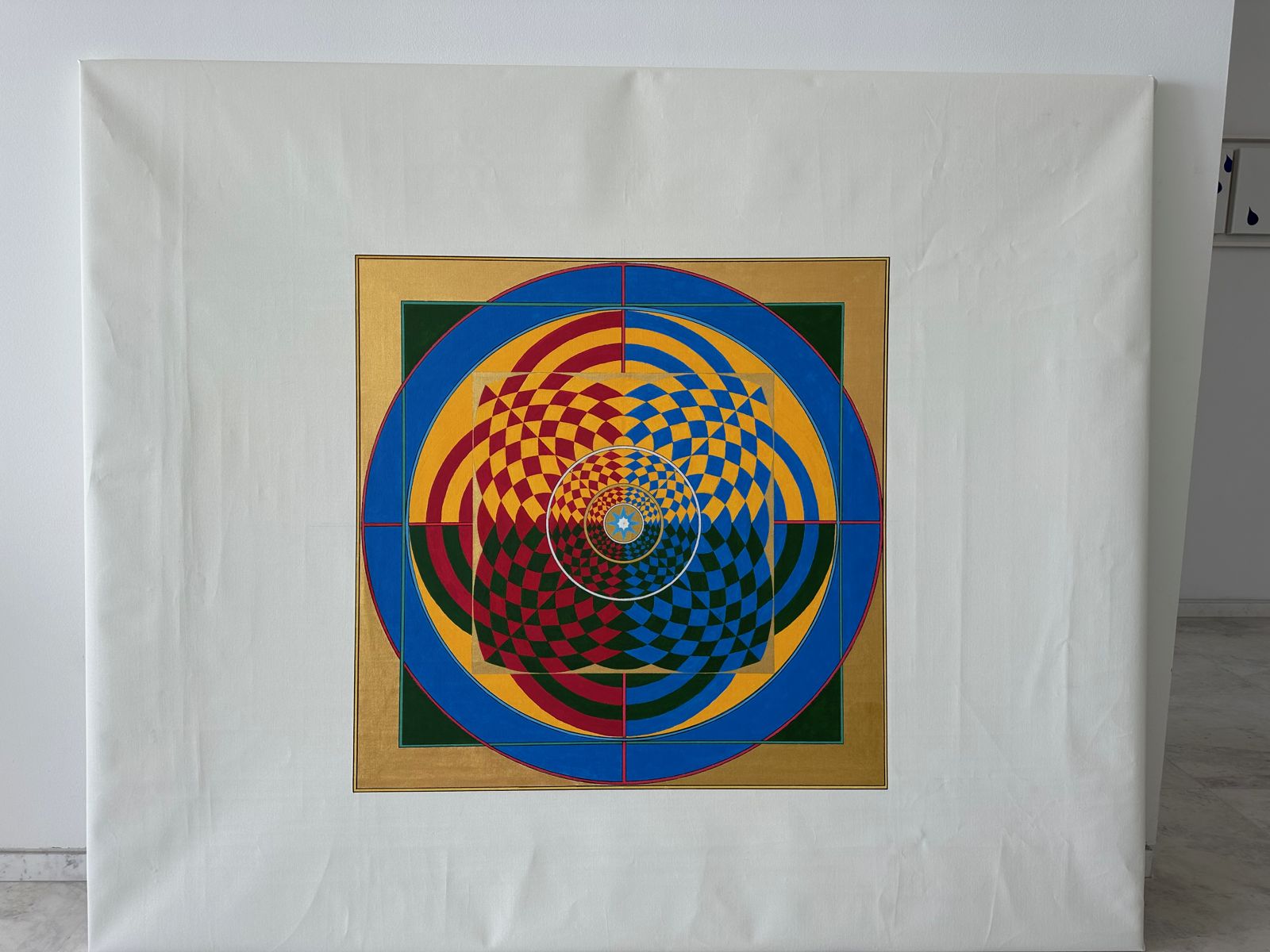
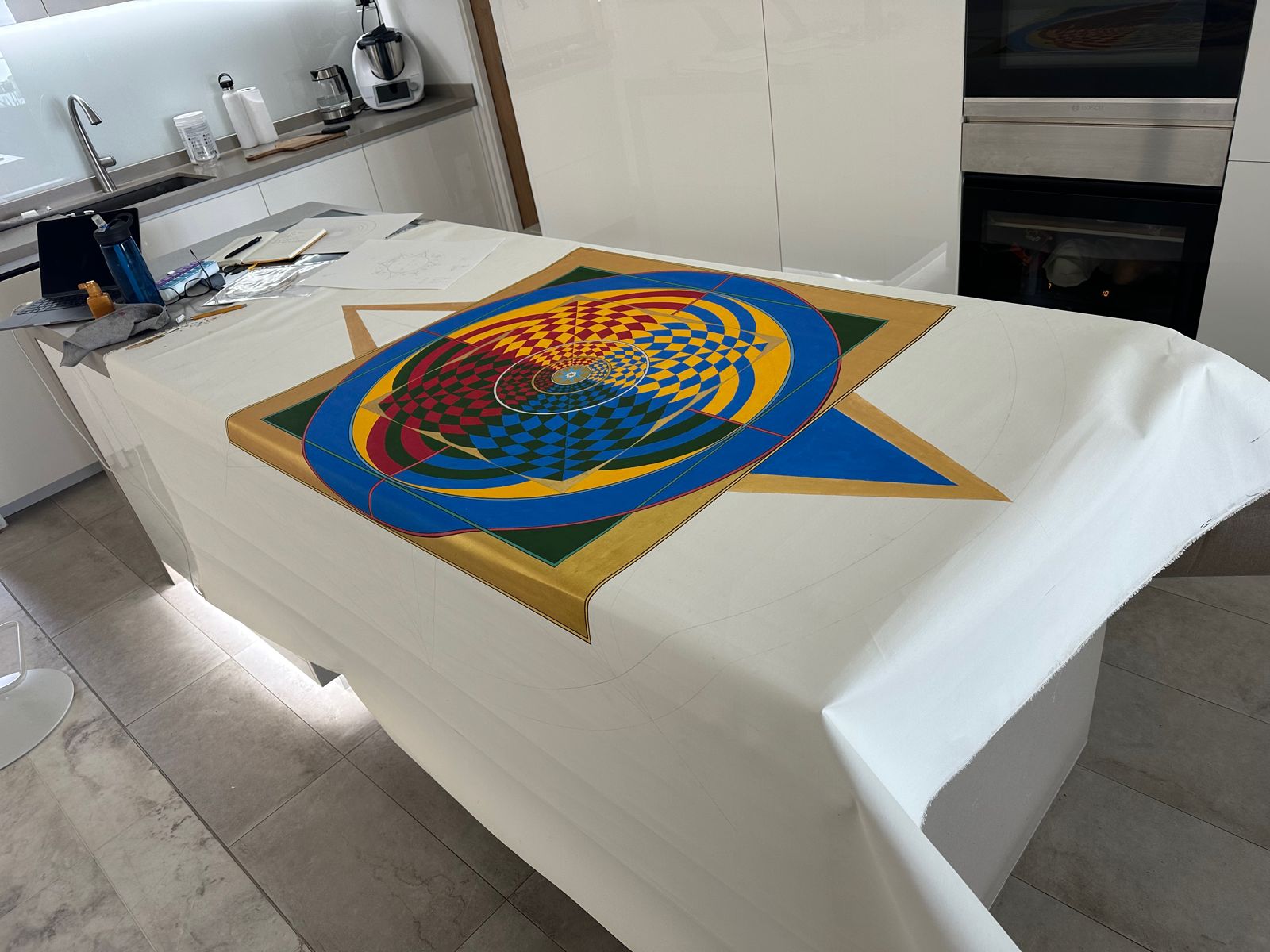
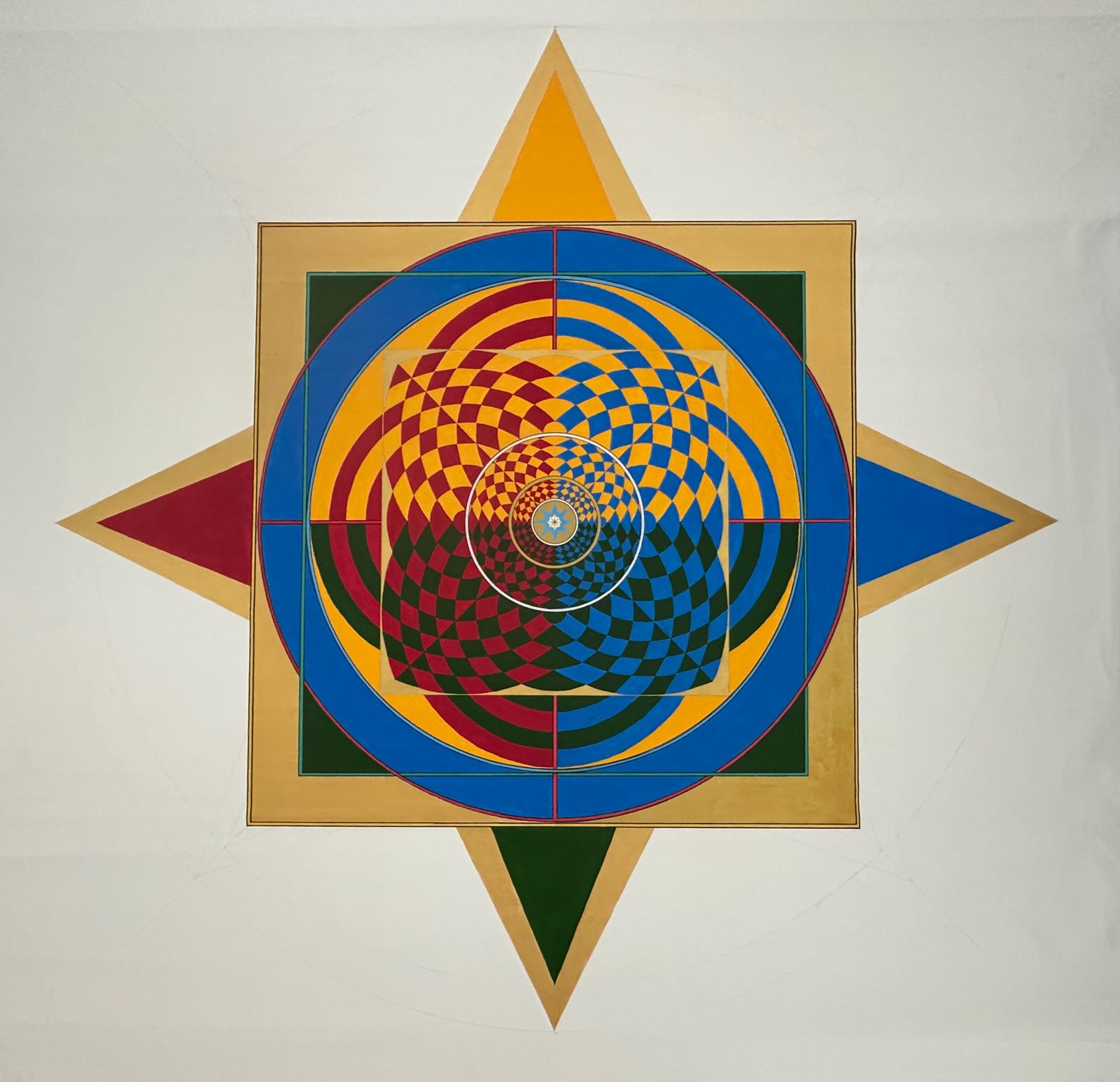
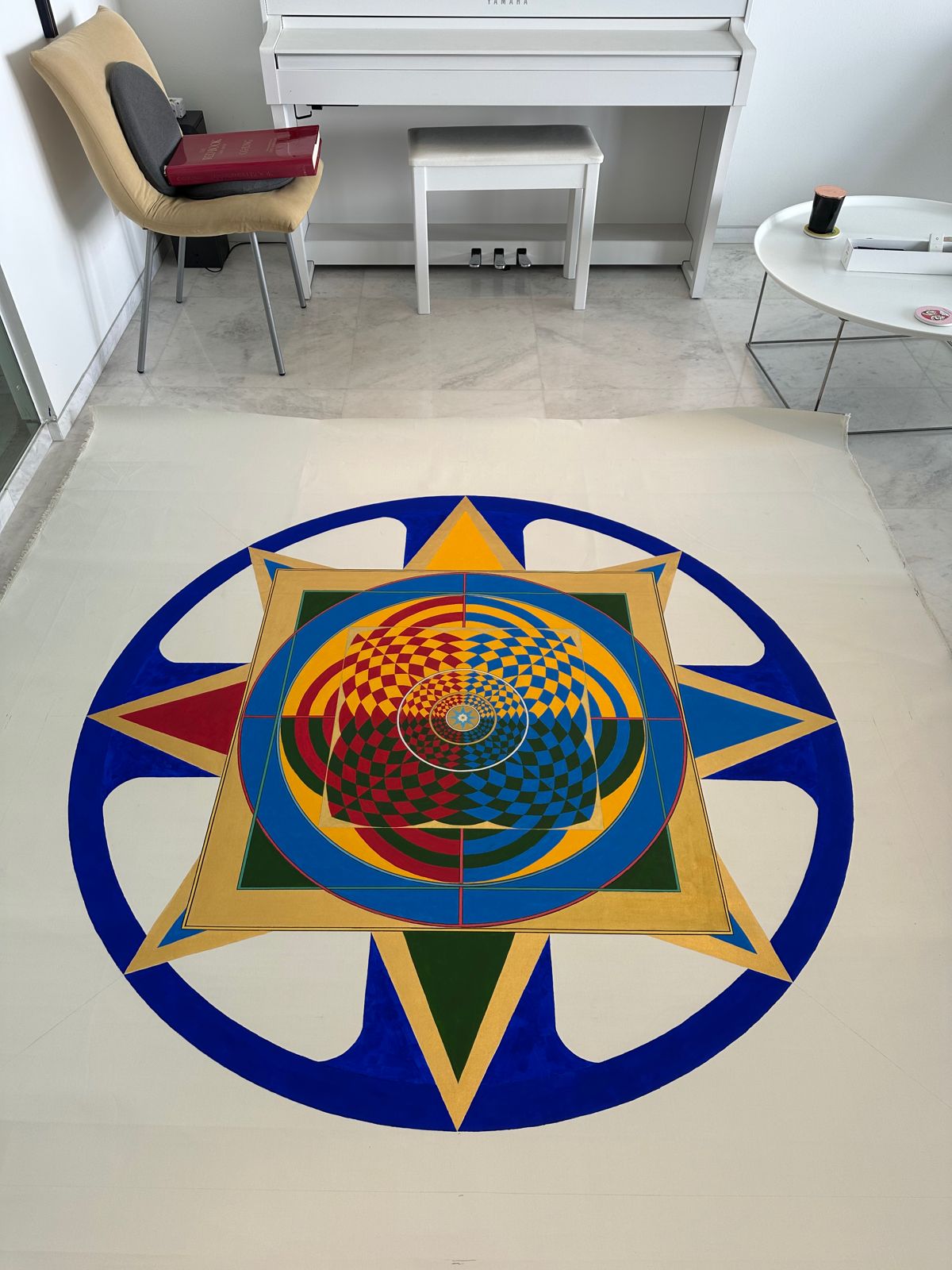
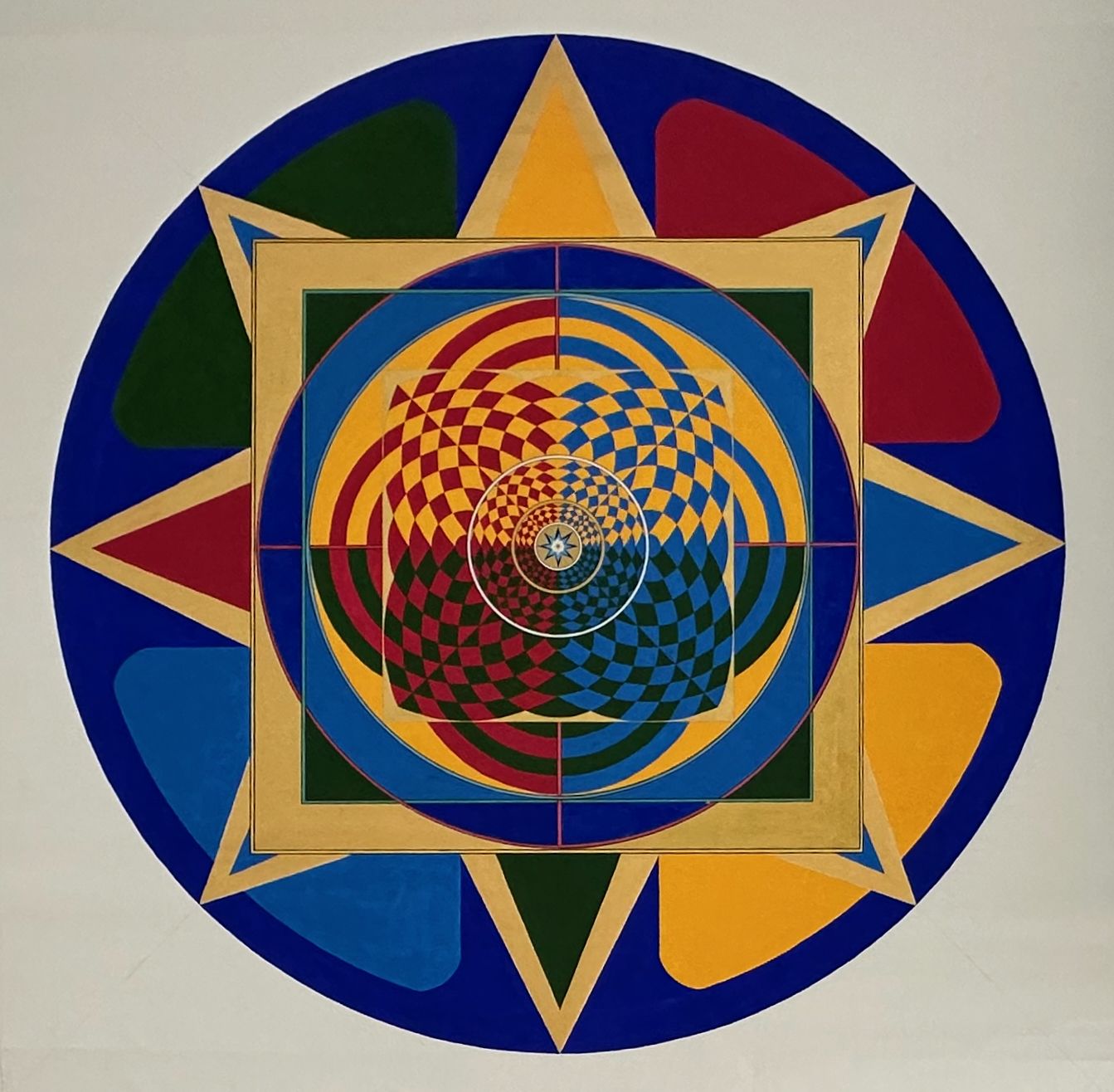
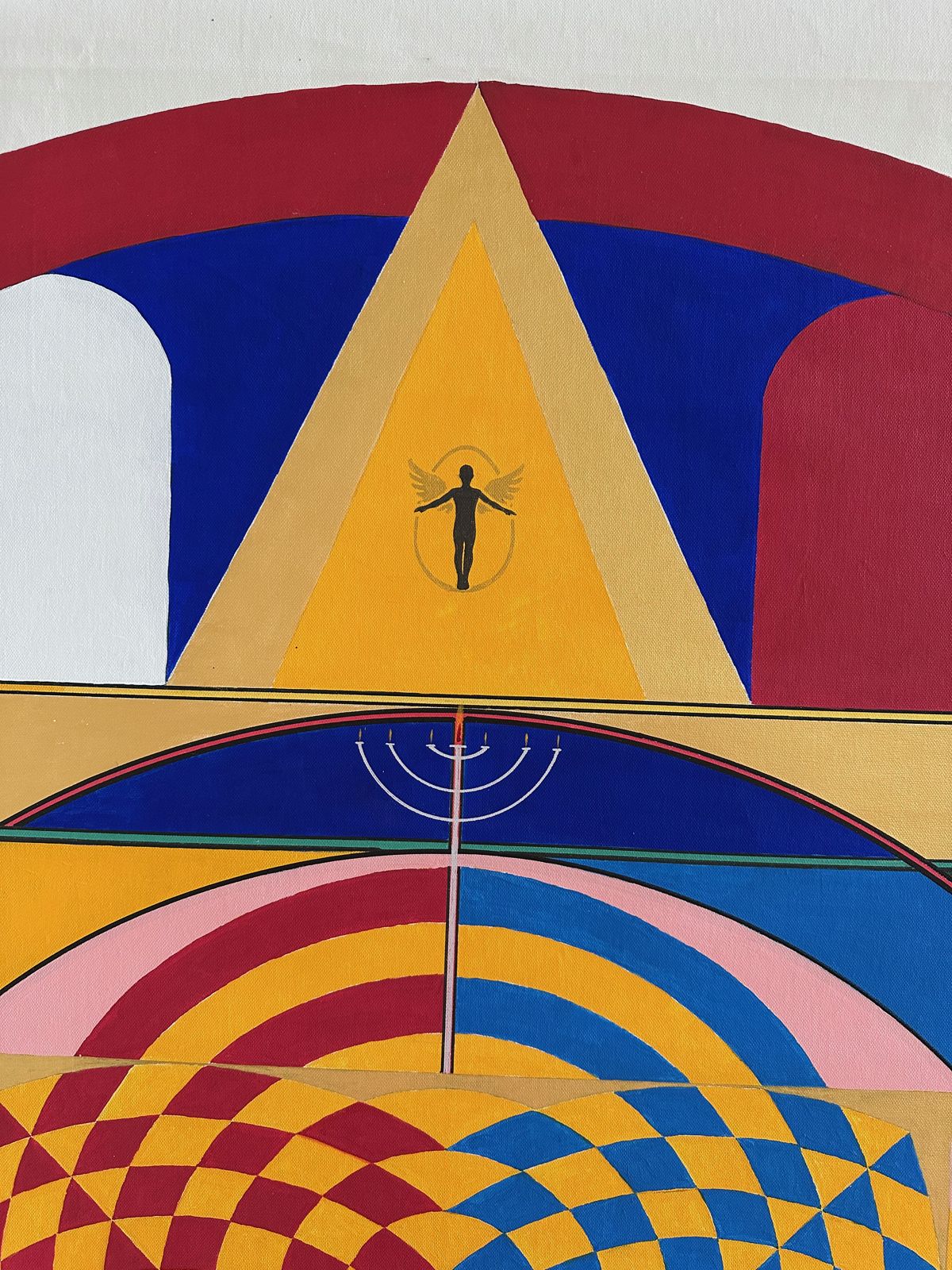
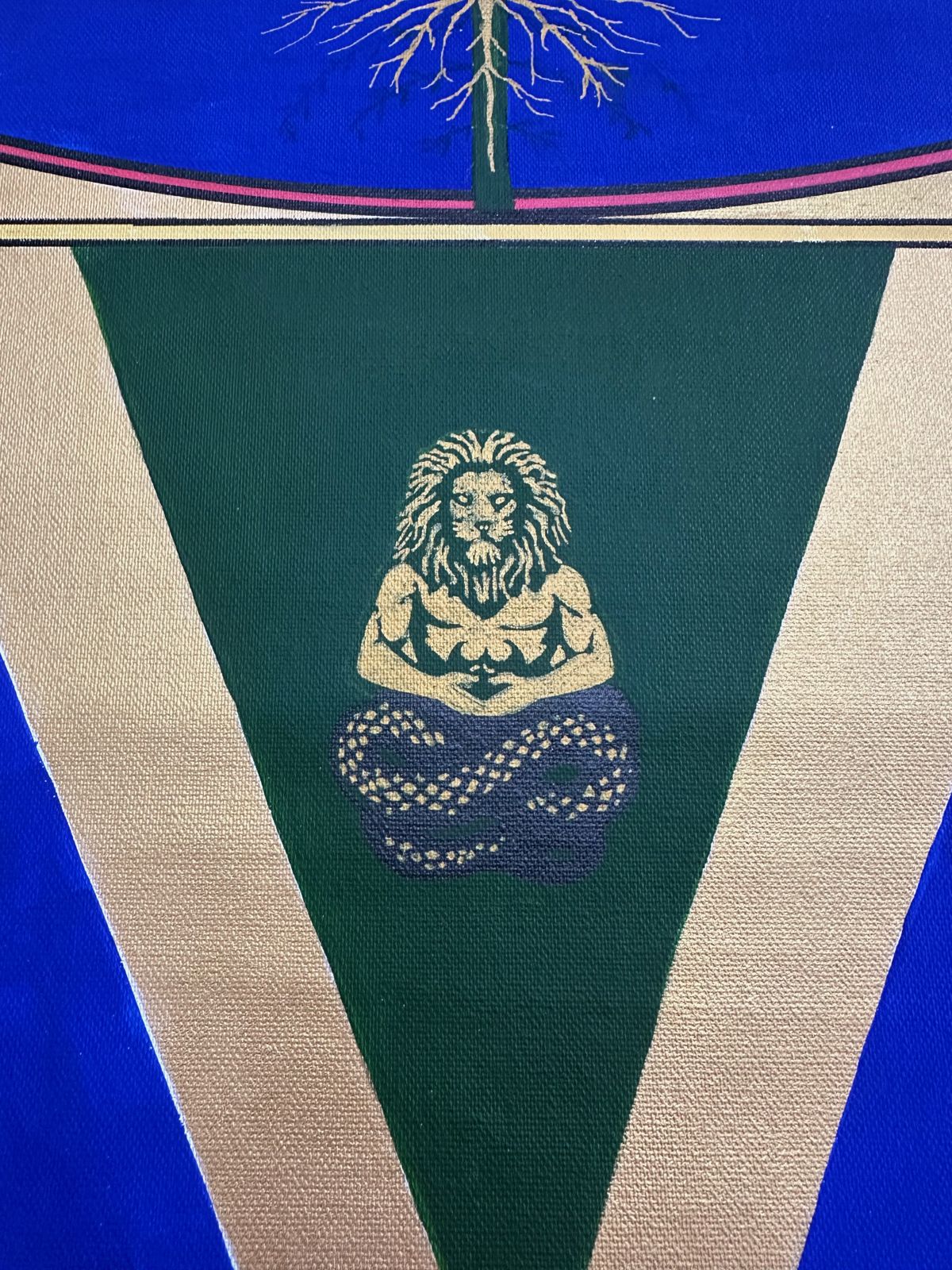
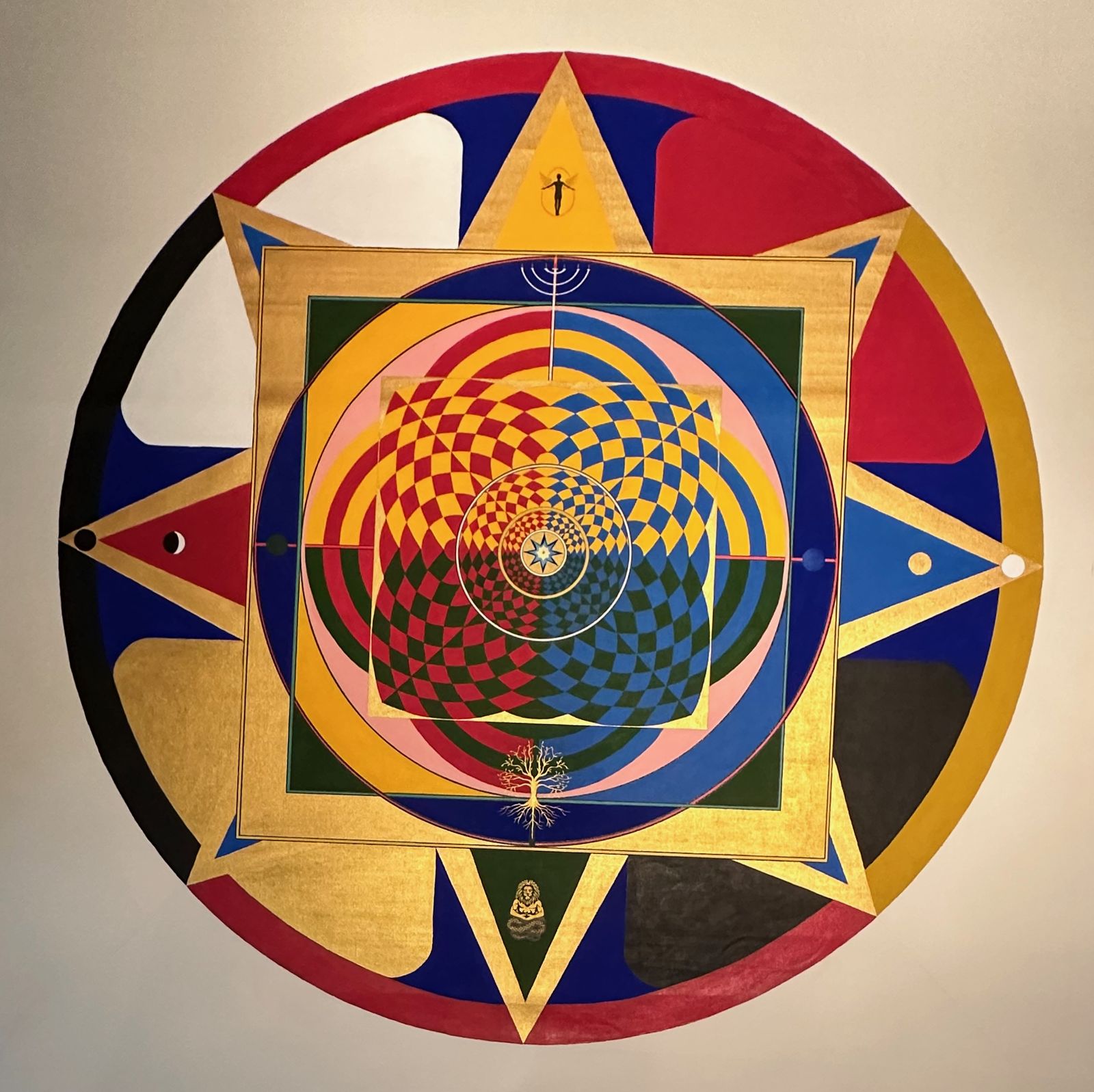
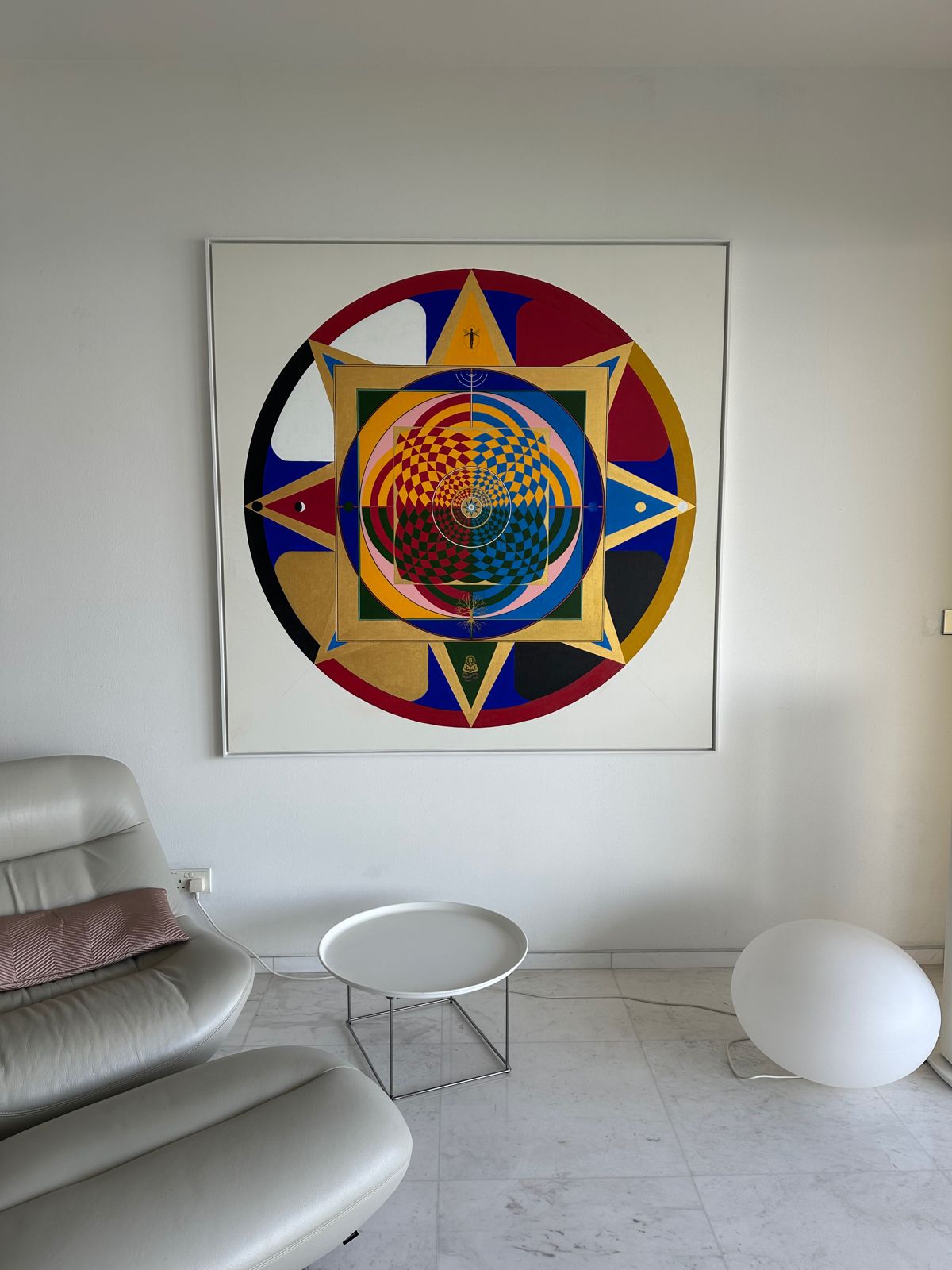
The canvas record of Systema Mundi Totius — acrylic and metallic pigment, six feet square — from the first pencilled circles on the second of May 2025 to the framed work on the wall in mid-July. The design itself was longer in the making: the preliminary drawings of the inner geometry, begun from one of Jung's earlier mandalas; the study; the working-out of what the painting would have to hold.
In 1916 Jung painted the Systema Mundi Totius — a system of all the worlds, a map of the whole. This painting is an interpretation of it, not a copy: the same architecture of wheel, square, star and circle, worked out again by hand, at a scale the body has to walk around.
This site keeps returning to one distinction — what is worked at, and what emerges. This page is the honest answer: both, all the way down. Every form was counted against a pencilled circle. And still the painting arrived somewhere the plan had not been.
The figures have names, and the names carry the argument. Elijah and Salome from the Red Book, Ha and Ka from the Seven Sermons and the Black Books, hold their stations among the rings. And the vertical axis carries Jung's most controversial claim: the god — Abraxas below — differentiates through the Tree of Life, through human consciousness and love, to emerge through the Tree of Light, through science and the arts, as the new god — Phanes, the boy emerging from the egg. The divine cannot make that journey without passing through us. All of this is unpacked in Nucleations from the Pleroma, on the Papers page.
The finished painting lives in the collection, among the Systema works. The practice it grew out of — three decades of it — is in the Archive.
Editions of the Systema paintings are planned. Questions about the original, or the making of it, are welcome.
Write to the studio